Your electrical panel rarely gets attention until something goes wrong. It sits in the basement, garage, or a hallway closet, quietly sending power to every circuit in the house. In Seattle, where many homes were wired decades before heat pumps, EV chargers, and home offices, the panel is often the oldest part of the electrical system and the first to fall behind.
The good news is that panels usually show warning signs well before they become a safety problem. This guide groups those signs by how you are likely to notice them, explains the difference between an upgrade and a replacement, and covers when to call an electrician.
Signs You Can See
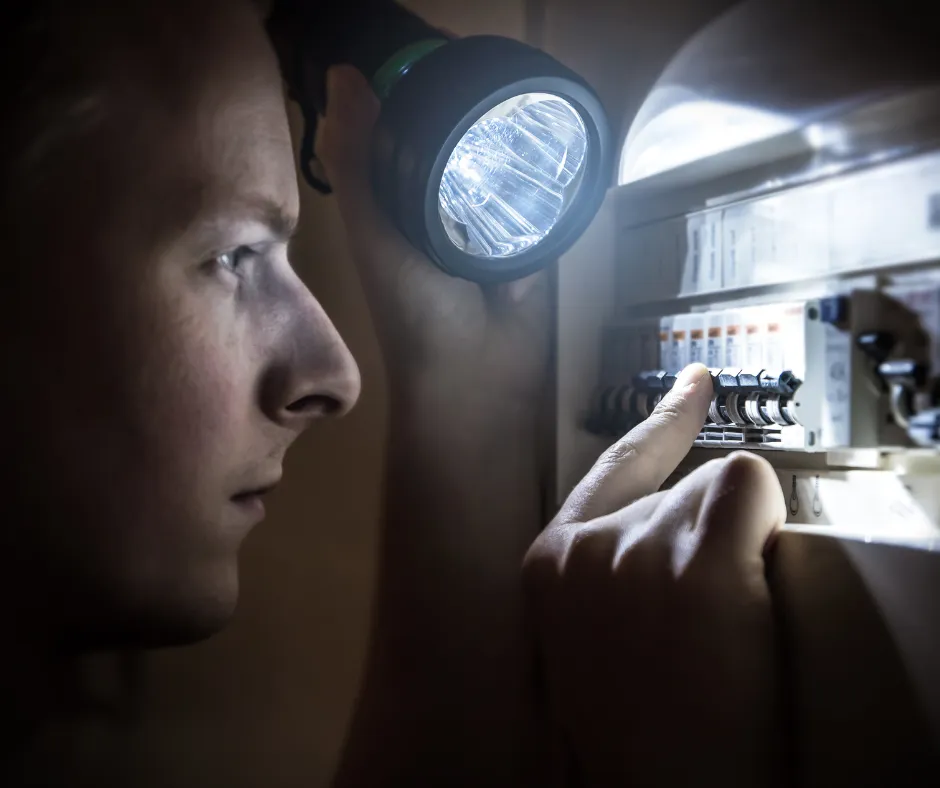
Open the panel door (not the inner cover) and take a look. Call an electrician if you notice any of the following:
- Rust, corrosion, or water stains. Damp basements and garages are common around Seattle, and moisture inside a panel can corrode breakers and bus bars.
- Scorch marks or discoloration on breakers, the panel cover, or nearby walls.
- Fuses instead of breakers. Fuse boxes were standard in homes built before the 1960s and were never designed for modern loads.
- No open breaker spaces, or tandem breakers squeezed in wherever they fit.
- Lights that dim or flicker when the microwave, dryer, or furnace blower starts. Our article on why lights flicker when you use the microwave explains what causes this.
Signs You Can Hear, Feel, or Smell
- Buzzing or crackling from the panel, which can indicate a loose connection or a failing breaker.
- A panel cover that feels warm to the touch. Panels should stay close to room temperature.
- A hot plastic or burning smell near the panel or an outlet. Turn off the affected circuit if you can do so safely and have it inspected right away.
Signs in How Your Home Uses Power
Some of the clearest signs show up in daily routines rather than at the panel itself.
- Breakers that trip regularly, especially when two large appliances run at once. A breaker that trips occasionally is doing its job. One that trips every week is telling you the circuit or panel is overloaded. Heating equipment is a frequent culprit, as our post on why a furnace trips the circuit breaker explains.
- Extension cords and power strips used as permanent fixes because there are not enough circuits.
- Appliances that run weakly or shut off unexpectedly.
Signs Based on Your Panel’s Age and Brand
Even a panel with no visible problems may be due for replacement. Most panels last roughly 25 to 40 years. Certain brands also have known reliability problems:
- Federal Pacific Electric (FPE) Stab-Lok panels were installed in many homes from the 1950s through the 1980s. Their breakers have a history of failing to trip during an overload.
- Zinsco and Sylvania-Zinsco panels can develop loose, overheating connections between the breakers and the bus bar.
- Pushmatic and other discontinued panels can be difficult to repair because replacement breakers are hard to find.
If your home has one of these panels, many electricians and home inspectors recommend replacing it regardless of how well it seems to work. Home insurers sometimes ask about them as well.
Electric Panel Upgrade vs. Replacement
People often use these terms interchangeably, but they describe different projects:
- An electric panel upgrade increases your home’s capacity, typically by moving from 60-amp or 100-amp service to 200 amps. It often includes a new panel, a new meter base, and coordination with Seattle City Light or Puget Sound Energy.
- An electric panel replacement swaps an outdated, damaged, or unsafe panel for a new one. The amperage may stay the same if your home already has enough capacity.
A licensed electrician can perform a load calculation to determine which project your home needs. BelRed handles both electric panel upgrades and panel replacements in Seattle.
When a Panel Upgrade Should Come First
Seattle homeowners are adding more electric equipment than ever. If you are planning any of the projects below, have your panel evaluated before the work begins:
- A heat pump installation to replace or supplement a gas or oil furnace
- EV charger installation in a garage or driveway
- An induction range, hot tub, or hybrid water heater
- A standby generator and transfer switch
- A kitchen remodel, addition, or finished basement
Planning these projects together lets you size the panel once for everything you expect to add. For a closer look at the process, read what Seattle homeowners should expect from an electrical panel upgrade.
Why Panel Work Is a Job for a Licensed Electrician
Panel work involves the service conductors coming from the utility, which stay energized even when the main breaker is off. It also requires an electrical permit and inspection in Seattle. A licensed electrician will size the panel correctly, follow the current electrical code, label every circuit, and coordinate the utility disconnect and reconnect.
Talk to BelRed About Your Electrical Panel
If you have noticed any of these signs, BelRed’s licensed electricians can inspect your panel and tell you whether it needs a repair, an electric panel upgrade, or a full electric panel replacement. We have served Seattle homeowners since 1986. Call (855) 345-6161 or schedule a visit online to learn more about our electrical services.