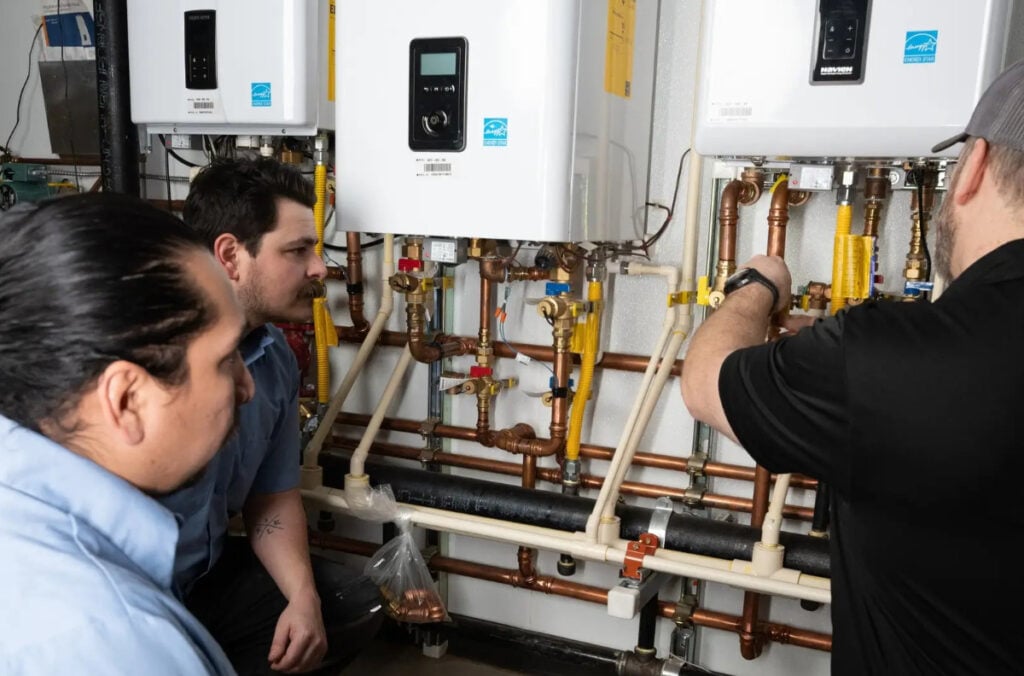
One of the biggest reasons Seattle homeowners choose a tankless water heater is longevity. A traditional tank water heater typically lasts 8 to 12 years. A well-maintained tankless unit can last 20 years or more.
That long life is not automatic, though. Like any appliance, a tankless water heater needs regular care to perform at its best. The good news is that the steps are simple, and most of them take very little time. Here is how to protect your investment and keep hot water flowing for decades.
How Long Does a Tankless Water Heater Last?
Most tankless water heaters are designed to last about 20 years, and many manufacturers back the heat exchanger with long warranties. Whether yours reaches that mark depends on three main factors: water quality, how often it is maintained, and how well it was sized and installed.
If you are still deciding whether tankless is right for your home, our guide to tankless vs. traditional water heaters explains the key differences.
What Shortens the Life of a Tankless Water Heater?
Understanding what wears a tankless unit down makes it easier to prevent problems.
- Mineral scale. Calcium and magnesium in water can build up inside the heat exchanger. Scale makes the unit work harder, reduces efficiency, and can eventually cause overheating or failure.
- Clogged filters. Most tankless units have an inlet water filter and an air intake filter. When they clog, water flow or combustion air drops, and the system strains.
- Venting problems. Gas tankless models need clear, properly installed vents. Blocked or damaged venting can cause error codes, poor performance, and safety risks.
- Improper sizing. A unit that is too small for your household runs at full capacity too often, which adds wear.
- Skipped maintenance. Small issues that go unnoticed for years usually turn into bigger repairs.
6 Ways to Extend the Life of Your Tankless Water Heater
1. Flush and Descale the Unit Every Year
Descaling is the single most important maintenance task for a tankless water heater. A technician circulates a descaling solution through the heat exchanger to dissolve mineral buildup, then flushes the system clean. Seattle’s water supply is relatively soft, which helps, but minerals still accumulate over time. An annual flush keeps your unit efficient and protects its most important component.
2. Clean the Inlet Water Filter
The inlet filter catches sediment and debris before they enter the unit. Check and clean it every few months, or whenever you notice reduced hot water flow. It is a quick task, and many homeowners can do it themselves by following the manufacturer’s instructions.
3. Keep the Air Intake and Vents Clear
Gas tankless units need a steady supply of fresh air and a clear path for exhaust. Make sure nothing blocks the vent terminals outside your home, such as leaves, nests, or stored items. Inside, keep the area around the unit free of dust and clutter.
4. Consider a Water Softener or Scale Inhibitor
If your home has well water or a higher mineral content, a water softener or scale-reducing system can slow buildup significantly. A plumber can test your water and tell you whether treatment makes sense for your home.
5. Set the Right Temperature
Running your tankless water heater at an unnecessarily high temperature speeds up scale formation and adds wear. A setting around 120°F is comfortable for most households and safer for families with young children.
6. Schedule Professional Maintenance
An annual service visit covers more than descaling. A technician inspects the burner, igniter, flame sensor, venting, gas connections, and error code history. Catching a worn part early is much easier than dealing with a breakdown. Our plumbing maintenance services include this kind of thorough check.
Warning Signs Your Tankless Water Heater Needs Attention
Even with good care, watch for these signs that your unit needs service:
- Water temperature fluctuates or turns cold during a shower.
- Hot water flow is weaker than it used to be.
- The unit displays an error code or shuts off unexpectedly.
- You hear unusual whistling, buzzing, or banging sounds.
- It takes noticeably longer for hot water to reach your faucets.
- You see water leaking around the unit or its connections.
These symptoms often point to scale buildup, a clogged filter, or a failing component. Addressing them early helps prevent bigger problems and keeps your system on track for a long life.
Professional Tankless Water Heater Service in Seattle
BelRed Heating, Cooling, Plumbing & Electrical has helped Seattle homeowners care for their water heaters since 1986. Our licensed plumbers service all major tankless brands, including Rinnai tankless water heaters, and we handle everything from annual descaling to repairs and new installations.
Whether you need routine maintenance or want to learn more about tankless water heaters in Seattle, our team is here to help. Call 855-345-6161 or schedule online to keep your tankless water heater running strong for years to come.