Few things are more frustrating than a furnace that kicks on, warms the house for a few minutes, then suddenly shuts itself off. It can feel random and confusing, especially when the thermostat is still calling for heat. Around Woodinville and the Greater Seattle Area, we hear this complaint a lot during colder stretches when furnaces are working their hardest.
What’s usually happening behind the scenes is overheating. Furnaces are designed with safety features that shut them down when temperatures climb too high. That shutdown is meant to protect your home and the system itself. The tricky part is figuring out what’s causing the overheating in the first place, and whether it’s something simple or a sign of a bigger issue.
Is your furnace turning on and off and leaving your home cold? If you’re in Woodinville or the Greater Seattle Area, reach out to BelRed for trusted furnace repair services. Call us today at (855) 345-6161 or contact us online to schedule your next service.
How Furnace Safety Shutoffs Actually Work
When a furnace overheats, it is not being dramatic or temperamental. It is doing exactly what it was designed to do. Inside the furnace are safety switches, often called limit switches, that monitor internal temperatures. When heat builds beyond safe levels, the switch shuts the system down to prevent damage or fire risk.
After cooling off, the furnace may restart on its own. That on-and-off pattern is often called short-cycling. While it may seem like a nuisance, it is actually a warning sign that something is wrong.
Common signs of overheating-related shutdowns include:
- The furnace turns on briefly, then shuts off
- The blower fan keeps running after the heat stops
- The house never quite reaches the set temperature
- The system restarts repeatedly in short intervals
Understanding that this behavior is a safety response helps explain why ignoring it is never a good idea.
Restricted Airflow Is the Most Common Cause
By far, the most common reason furnaces overheat is restricted airflow. Furnaces rely on a steady stream of air moving across the heat exchanger to carry heat safely into your home. When that airflow is blocked, heat builds up inside the furnace instead.
This happens more often than homeowners realize, especially during long heating seasons when filters and vents are easy to forget about.
Here are some frequent airflow related causes:
- Dirty air filters: A clogged filter limits airflow, causing heat to stay trapped inside the furnace longer than intended.
- Closed or blocked vents: Furniture, rugs, or closed registers reduce air movement through the system.
- Dirty blower components: Dust buildup on the blower wheel reduces its ability to move air efficiently.
- Collapsed or damaged ductwork: Restricted ducts prevent proper circulation throughout the home.
Fixing airflow issues is often the fastest way to stop overheating and restore normal furnace operation.
Problems With the Blower Motor or Fan
Even with clean filters and open vents, the furnace cannot stay cool if the blower motor is not doing its job. The blower is responsible for moving heated air away from the furnace and into your duct system. When it struggles or fails, heat backs up fast.
Blower problems can develop slowly, which makes them easy to miss until shutdowns start happening regularly. Electrical issues, worn bearings, or failing capacitors are common culprits.
Here are signs the blower system may be involved:
- Weak airflow from vents
- Unusual humming or rattling noises
- The blower runs inconsistently
- The furnace overheats even with a clean filter
- The system shuts down more often during longer heating cycles
Blower repairs are not DIY friendly. Professional diagnosis is important to avoid electrical risks and further damage.
A Dirty or Failing Heat Exchanger Can Cause Overheating
The heat exchanger is one of the most important parts of your furnace. It transfers heat from combustion gases into the air that circulates through your home. When it becomes dirty, cracked, or damaged, heat transfer becomes inefficient and unsafe.
In some cases, soot or debris buildup insulates the heat exchanger, trapping heat where it should not stay. In more serious cases, cracks can form, which is a safety hazard that requires immediate attention.
Common heat exchanger-related issues include:
- Reduced airflow across the exchanger
- Excessive heat retention inside the furnace
- Safety shutoffs triggering frequently
- Unusual smells during operation
Because of safety risks, heat exchanger problems should always be handled by trained professionals with proper inspection tools.
Incorrect Furnace Size or Installation Issues
Sometimes overheating is not caused by wear or neglect, but by a system that was never quite right to begin with. An oversized furnace heats the home too quickly and shuts off before heat can be distributed properly. This rapid cycling causes internal temperatures to spike.
Installation issues can also contribute. Improper duct sizing, poor airflow design, or incorrect blower settings all affect how heat moves through the system.
Here are installation-related factors that can lead to overheating:
- Furnace output too large for the home
- Ductwork not sized to handle airflow
- Incorrect blower speed settings
- Poor return air design
- Inadequate ventilation around the furnace
Correcting these issues often requires system evaluation and adjustments rather than simple repairs.
Faulty Sensors and Control Components
Modern furnaces rely on sensors and control boards to manage safe operation. When those components fail or drift out of calibration, the furnace may misread temperatures and shut down unnecessarily, or fail to respond correctly to rising heat.
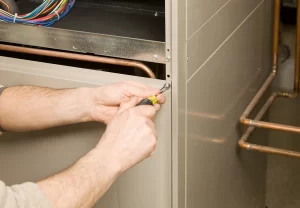
Limit switches, flame sensors, and control boards are all part of this safety network. When one component malfunctions, it can trigger overheating shutdowns even if airflow and combustion are otherwise normal.
Here are common control-related causes of overheating shutdowns:
- Faulty limit switch: A failing switch may trip too early, even when temperatures are within normal range.
- Dirty flame sensor: Incorrect flame detection can disrupt burner operation and airflow timing.
- Control board issues: Electrical faults can interrupt blower operation or burner cycles.
- Loose wiring connections: Intermittent electrical contact causes inconsistent system behavior.
These components require testing tools and expertise to diagnose accurately.
Why Ignoring Overheating Can Lead to Bigger Problems
It is tempting to reset the furnace and hope the issue goes away, especially if it seems to run fine afterward. Unfortunately, repeated overheating puts serious stress on critical components. Each shutdown is a warning that something is not right.
Over time, overheating can cause:
- Cracked heat exchangers
- Blower motor failure
- Shortened furnace lifespan
- Increased risk of safety hazards
- Higher repair costs down the road
Addressing the root cause early almost always saves money and prevents uncomfortable breakdowns during the coldest days.
When to Stop Troubleshooting and Call a Professional
While changing filters and checking vents are safe first steps, there is a point where DIY troubleshooting should stop. Furnaces involve combustion, electricity, and safety systems that should not be guessed at.
If overheating continues after basic checks, professional service is the safest path forward. A trained technician can identify whether the issue is airflow, mechanical, electrical, or design-related.
Situations that call for professional help include:
- Repeated shutdowns in a single day
- Burning smells or unusual noises
- The furnace shuts off minutes after starting
- The blower runs constantly without heat
- The system is more than 10 years old and never serviced
Call BelRed Today for Furnace Overheating or Any Other Furnace Issues
If your furnace keeps overheating and shutting off, you do not have to live with unreliable heat or constant resets. At BelRed Heating, Cooling, Plumbing & Electrical, we help homeowners across Woodinville and the Greater Seattle Area diagnose and fix overheating issues the right way.
Our experienced technicians look at airflow, safety controls, blower performance, and system design to find the real cause, not just the symptom. We have been serving the region since 1986, and we know how local homes and furnaces behave during our long heating seasons.
Call BelRed today at (855) 345-6161 for trusted heating services and let us restore safe, steady heat to your home before small issues turn into major repairs.