If you’ve ever looked outside on a cold Woodinville morning and noticed your heat pump covered in frost, you probably paused for a second. A little frost is normal, but when it keeps building up and never seems to clear, that’s when concern sets in. Homeowners across the Greater Seattle Area ask us this question every winter, especially during our damp, chilly stretches.
Heat pumps are designed to defrost themselves quietly and automatically. When that process does not happen, comfort drops, energy bills rise, and the system can take a beating. Understanding why your heat pump might not be defrosting helps you know what’s normal, what’s not, and when it’s time to call for help before a small issue turns into a bigger one.
Are you having trouble with a frozen heat pump? If you’re in Woodinville or the Greater Seattle Area, reach out to BelRed for trusted heat pump services. Call us today at (855) 345-6161 or contact us online to schedule your next service.
How the Heat Pump Defrost Cycle Is Supposed to Work
To understand why defrost problems happen, it helps to know how the defrost cycle works in the first place. During heating mode, your heat pump pulls warmth from the outdoor air. In cool, wet conditions, as we get here, moisture can freeze on the outdoor coil. That frost blocks airflow and reduces efficiency.
When the system senses enough frost buildup, it temporarily switches into defrost mode. It reverses operation briefly, sending warm refrigerant through the outdoor coil to melt the ice. Once cleared, the system returns to heating your home.
During a normal defrost cycle, you may notice:
- Steam rising from the outdoor unit
- A temporary pause in warm air indoors
- Water dripping near the outdoor unit
- A brief change in system sound
- The outdoor fan stopping momentarily
All of that is normal. Problems start when the defrost cycle never kicks in or does not complete properly.
Frost Versus Ice: Knowing the Difference Matters
One of the most common misunderstandings we see is homeowners confusing normal frost with harmful ice buildup. A light layer of frost on the outdoor coil during cold weather is expected. It should come and go as the defrost cycle runs.
Ice, on the other hand, is a red flag. Thick ice that coats the coil, covers the fan, or keeps building up day after day means the defrost system is not doing its job. That ice can strain the compressor and dramatically reduce heating performance.
Here’s how to tell the difference:
- Frost looks light, powdery, and evenly spread
- Ice looks thick, solid, and heavy
- Frost clears on its own periodically
- Ice lingers and keeps growing
- Frost usually appears overnight
- Ice sticks around all day
If you’re seeing solid ice instead of light frost, it’s time to start troubleshooting.
Dirty Coils and Restricted Airflow Can Stop Defrosting
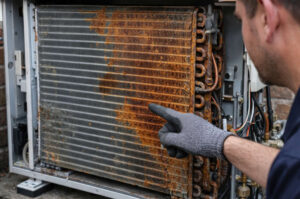
One of the simplest reasons a heat pump fails to defrost is restricted airflow. The outdoor coil needs proper airflow to sense temperature changes and operate correctly. When dirt, leaves, pine needles, or moss clog the coil, the system struggles to regulate itself.
In the Pacific Northwest, outdoor units take a beating from moisture and debris. Even a system that worked fine last winter can run into trouble if maintenance slips.
Airflow problems often come from:
- Dirty or clogged outdoor coils
- Leaves and debris packed around the unit
- Shrubs growing too close
- Snow or ice blocking airflow
- Dirty indoor air filters
Sometimes a thorough cleaning solves the issue. Other times, airflow problems have already caused damage that needs professional repair.
Defrost Control Board or Sensor Issues
When a heat pump does not defrost at all, electrical components are often involved. The defrost control board and temperature sensors tell the system when to start and stop the defrost cycle. If they fail, the system never gets the signal to act.
These components can wear out over time, especially in systems that experience constant moisture exposure. Electrical connections may also corrode, leading to inconsistent operation.
Signs of defrost control problems include:
- Ice buildup despite mild outdoor temperatures
- No visible defrost cycles over long periods
- Heat pump running constantly with poor output
- System short cycling or acting erratically
- Error codes on newer systems
These parts are not DIY friendly. Diagnosing and replacing them requires proper tools and training to avoid further damage.
Low Refrigerant Levels Can Disrupt the Defrost Cycle
Refrigerant plays a major role in both heating and defrosting. When refrigerant levels drop due to leaks, the heat pump cannot generate enough heat to melt ice during the defrost cycle. The result is ice buildup that never fully clears.
Low refrigerant often sneaks up on homeowners because the system still runs, just poorly. Over time, ice worsens and comfort indoors suffers.
Common warning signs of low refrigerant include:
- Weak or lukewarm air from vents
- Longer run times with less heat
- Ice forming faster than usual
- Hissing or bubbling sounds
- Higher energy bills without explanation
Refrigerant issues always require professional service. Simply adding refrigerant without fixing the leak only delays the problem.
Thermostat and Control Settings Can Play a Role
Sometimes the issue is not the heat pump itself, but how it is being controlled. Thermostat settings that conflict with system operation can interfere with defrost cycles. This is especially common after thermostat replacements or upgrades.
Incorrect wiring, incompatible thermostats, or programming errors can prevent the system from shifting modes properly. In dual fuel or advanced heat pump setups, coordination between components is critical.
Things that can interfere with defrost operation:
- Incorrect thermostat configuration
- Aftermarket thermostats not designed for heat pumps
- Wiring issues from previous service
- Control board communication errors
- Manual overrides that lock out defrost
A professional check ensures your thermostat and heat pump are working together as intended.
Why Ignoring Defrost Problems Can Get Expensive Fast
A heat pump that does not defrost is not just uncomfortable, it is at risk. Ice buildup puts stress on the compressor, fan motor, and electrical components. Over time, this stress can shorten system life and lead to costly repairs or premature replacement.
We often see systems that could have been saved with early service but ended up needing major repairs because ice was ignored for too long. Acting early almost always costs less and protects your comfort.
Risks of ignoring defrost issues include:
- Compressor failure
- Reduced heating capacity
- Skyrocketing energy bills
- Water damage from melting ice
- Shortened system lifespan
If ice keeps returning, it is worth getting answers sooner rather than later.
Is Your Heat Pump Struggling to Defrost? Get Trusted Heat Pump Repair and Maintenance From BelRed
If you are wondering why your heat pump does not defrost, you are not alone, and you do not have to guess your way through it. At BelRed Heating, Cooling, Plumbing & Electrical, we help homeowners across Woodinville and the Greater Seattle Area solve defrost issues before they turn into major system problems.
Our experienced technicians know how local weather affects heat pumps, and we know exactly what to look for when defrost cycles stop working.
Whether it is airflow, controls, refrigerant, or a deeper mechanical issue, we get to the root of the problem fast. Call BelRed today at (855) 345-6161 and let us restore your heat pump’s performance so your home stays warm, efficient, and worry-free all winter long.